


When dyeing your hair, nothing is worse than discovering that things aren’t going to turn out exactly how you planned. Hot roots – orange or yellow tones right around your scalp that are lighter than the rest of your hair – are the worst of the worst. Beyond not looking great, they can be difficult to fix. Unfortunately, hot roots are a common result for most people when lightening their hair for the first time.
If you’re looking for a hot roots fix, you’re in the right place.
What are Hot Roots?
When the color of your roots (about half an inch from the scalp) appears lighter than the rest of your hair, you’ve got hot roots. For example, you may have bright orange roots and the rest of your hair is brown. For blonde hair, you may have banana-colored roots and orange hair beneath it. This is more common than you think and can even happen to experienced hair stylists
What Causes Hot Roots?
Many people don’t realize that their scalp generates heat. This means that the heat of your scalp can activate the lightener (bleach) and cause it to lift faster at the roots than lightener on the rest of your hair. This leads to something we call overprocessing, where the roots are overprocessed compared to the rest of your hair.
If you’ve ever had your hair significantly lightened in the salon, you likely had foils folded over each section. This is because foil traps the heat and makes the lightener work faster – just like the heat from your scalp does at your roots.
How to Fix Hot Roots?
Now for what you really want to know: the key to fixing hot roots. Keep in mind that not all hair is the same, and what may work for you may not work for everyone. If you have curly hair and are concerned about the texture of your hair possibly affecting your lightener or hot roots, find out more about your hair texture here.
Now, onto fixing

-
Shadow Root?
- Shadow roots are super trendy
- You don’t have to necessarily go to a salon to do it
- You won’t have to dye or lighten all of your hair again
- It’s low-maintenance because it’s a lived-in look
-
Try Toning
- It's easy to apply
- You probably already have toner on hand if you’re lightening your hair
- Purple shampoos can be used multiple times to keep your hair toned
-
Seek Color Correction
A shadow root is a common look that many people do intentionally, so it is a great solution if lightening your hair didn’t turn out as planned. Adding a shadow root means making your roots darker than the rest of your hair. This can add depth and dimension to your hair and give a more natural, intentional look than if your roots were lighter than the rest of your hair.
It is important to find the right color for a shadow root, however. Make sure to select a color that compliments the rest of your hair. If you have blonde hair, for example, you may not want a black root. Instead, you will likely want a dark blonde or brown to tie in the shades.
Pro Tips
Keep in mind that your roots will be lighter, so the color will also appear lighter. Do a strand test and make sure that the root will turn out darker than the rest of your hair. Avoid overlapping beyond the root to the existing color.
Why We Love It
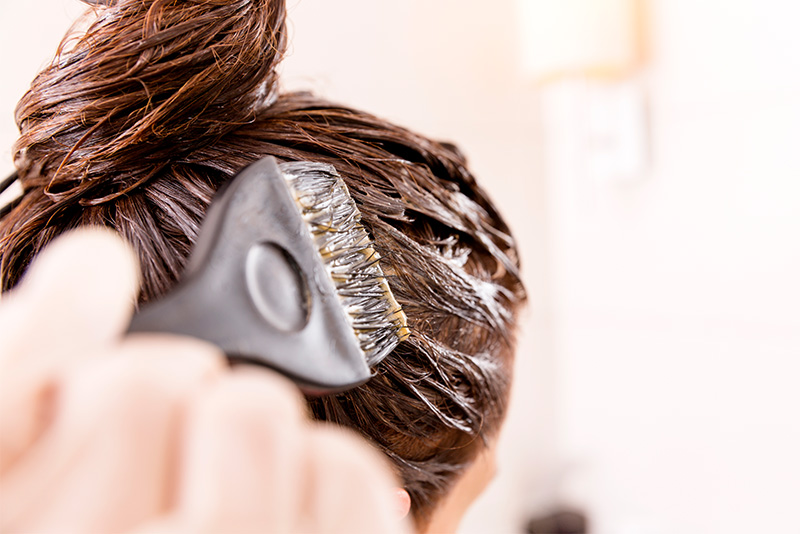
Toning is the process of canceling out warm and brassy tones — like orange — in your hair. This works especially well for blonde hair where the roots are slightly brassier or lighter than the rest of the hair. The right toner can help even out the color, but not all toners are made for the same hair color.
Pro Tips
There are different types of toner, from permanent color to purple shampoo. Using the right purple shampoo can eliminate brassiness and avoid additional damage to your hair from using a permanent color to tone.
We often recommend Wella toners for eliminating brass and evening out color. If you don’t know the difference between toner types, check out our article, Wella t14 vs Wella t18: What’s the Difference?
Why We Love It
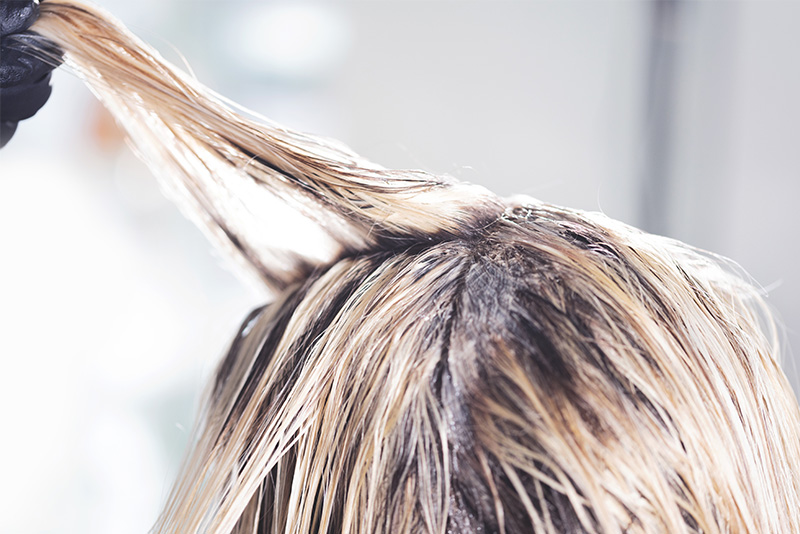
If toning or dyeing your hair doesn’t work or your hot roots are too uncontrollable, you can seek a color correction process from a professional. Color corrections are expensive, but this may be your best bet if you don’t feel comfortable doing it on your own, or if your hair is severely damaged.
Pro Tips
Research hair professionals near you and read reviews. Not every hair stylist will be able to handle a color correction. You will want to go to someone who likely specializes in color and has good reviews.
How to Avoid Hot Roots?
The best way to fix hot roots is to avoid them in the first place. And the best way to avoid hot roots is to lighten your roots last. We almost always recommend starting from the shaft of your hair when lightening and waiting until the last few minutes to lighten your roots. This way, the lightener will sit for less time on your roots and give you a more even look when it is washed out.
Frequently Asked Questions
How to Fix Hot Roots on Red Hair?
Natural red hair can be difficult to color correct. In the case of hot roots on red hair, you may want to dye your roots a darker color or seek color correction from a professional.
Can I Dye Over Hot Roots?
You should be able to dye over hot roots. However, we recommend toning your hair first to eliminate brassiness and avoid any unwanted color interactions. Also keep in mind that if your roots are lighter than the rest of your hair before dyeing, they may still be lighter after. Consider leaving the hair dye on your roots longer than the rest of your hair.
Will Hot Roots Go Away on Their Own?
Hot roots will eventually grow out as your roots grow, but the color will remain as a stripe of lighter hair beneath your natural root. It is best to take care of hot roots immediately after they happen.
How Do You Get Rid of Hot Brassy Roots?
Brass can often be eliminated or reduced by the right toner.
